
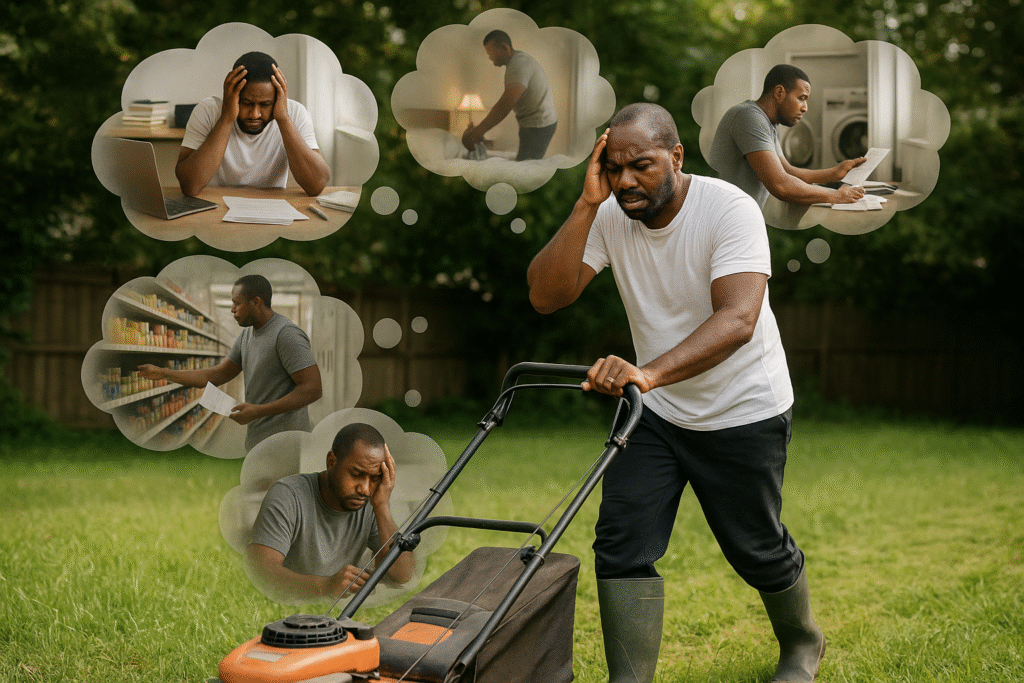
When Rest Isn’t Rest
Escaping the Idolatry of Endless Doing
True rest is not laziness but trust. It is choosing to lay down our striving and receiving God’s gift of renewal (Hebrews 4:9–11). When a man learns to rest in Christ, he leads his home with peace instead of pressure, showing his family that worth is found in identity, not performance (Psalm 23:2–3; John 15:5). Rest becomes a weapon against anxiety and burnout, reminding us that “unless the Lord builds the house, the builders labor in vain” (Psalm 127:1).
Key Scripture: Hebrews 4:9–11
“There remains, then, a Sabbath-rest for the people of God; for anyone who enters God’s rest also rests from their works, just as God did from his. Let us, therefore, make every effort to enter that rest…”
Other Scripture: Psalm 127:1–2; John 15:5
Exhortation
For many men, rest has become a concept we acknowledge but rarely experience. We know we should slow down, take a break, even “sabbath,” yet we often find ourselves unable to fully disengage. Even when we are physically still, our minds remain busy, our hearts heavy, and our sense of worth quietly entangled with how much we are doing or producing. The world applauds our busyness, but in the kingdom of God, endless activity can be a sign of self, not Spirit, of pressure, not purpose, and of unrest, not strength. Scripture warns us that “unless the Lord builds the house, the builders labour in vain” (Psalm 127:1–2). The more we wear productivity as a badge of honour, the more we risk turning it into a quiet idol—something that defines us more than God does.
This is where the deeper danger lies: when good things like work, ministry, or even fatherhood become ultimate things. We slowly begin to believe that if we stop doing, everything will fall apart. Our value gets hooked to our output, and we become restless even in rest. Distraction then masquerades as relaxation—binge‑watching, scrolling, gaming, always “doing something”—but none of it restores the soul. Ecclesiastes reminds us, “The race is not to the swift, nor the battle to the strong… but time and chance happen to them all” (Ecclesiastes 9:11). It is not laziness that many of us wrestle with; it is the fear that stopping will expose the fact that we don’t know how to simply be. Yet, Christ never invited us to burnout, rather, He called us to abide (John 15:5).
When Jesus said, “Come with me by yourselves to a quiet place and get some rest” (Mark 6:31), He was not simply suggesting a nap, but was pointing to a pattern. Rest is not just physical; it is emotional, spiritual, and relational. It is where we unburden our inner weight and find peace not in what we control, but in who holds us. That is why true rest requires faith. Hebrews 4:9–11 tells us, “There remains a rest for the people of God… let us strive to enter it.” It takes intention to step away from the noise, silence the lies of inadequacy, and receive rest as a gift, not a reward. It is not earned; it is inherited by sons.
And when a man learns to rest well, he leads differently. He brings peace, not pressure, into his home. He teaches his children that their worth is not in performance, and he allows his wife to see that strength also includes softness and trust. Rested men are dangerous to the kingdom of darkness because they are no longer performing for approval, but are operating from identity. They say no to things that drain them so they can say yes to what God actually called them to do. Like David, who declared, “He makes me lie down in green pastures, He leads me beside still waters, He restores my soul” (Psalm 23:2–3), they are present, rooted, and harder to shake.
So today, we challenge every man to ask: What is one thing I need to stop doing that is rooted more in pressure than purpose? And then, what is one practice I can start to experience God’s rest—not just from work, but in Him? Rest is a weapon: it breaks anxiety, it exposes our idols, and it teaches us trust. Remember, “by strength shall no man prevail” (1 Samuel 2:9). You are not valuable because of what you do; you are valuable because of who you belong to. And your home, your health, and your heart will all be better when you learn to stop, breathe, and rest in the One who never sleeps nor slumbers (Psalm 121:4).
What is one thing in your life that you need to stop doing because it is driven more by pressure than by God’s purpose? And what is one simple practice you can begin that will help you experience God’s rest—both in that area and more generally in Christ?
Rest is God’s design, not weakness – True rest is more than physical stillness; it is trusting God with our worth and identity (Psalm 127:1–2).
Busyness can become an idol – When work, ministry, or even fatherhood define us more than God, we risk turning good things into ultimate things (Ecclesiastes 9:11).
Jesus modeled rhythms of rest – He invited His disciples to withdraw and rest (Mark 6:31) and taught that abiding in Him is the source of fruitfulness (John 15:5).
Rest requires faith and intention – Hebrews 4:9–11 reminds us that entering God’s rest is an act of trust, not something earned by performance.
Rest transforms leadership – A rested man leads his home with peace, not pressure, teaching his family that worth is found in identity, not performance (Psalm 23:2–3).
Rest is a spiritual weapon – It breaks anxiety, exposes idols, and strengthens us to resist the enemy’s lies (1 Samuel 2:9; Psalm 121:4).
Identify one task, habit, or commitment outside your core responsibilities (like your 9–5 job) that you usually do out of pressure, not purpose, and intentionally pause it for one day this week. Use that time to slow down and simply be with God, even if only for 30 quiet minutes. Pay attention to what rises in the silence — restlessness, guilt, or peace. Journal what you notice. Let it reveal where you’ve been striving instead of abiding, and bring it honestly before God.
Lord, help me to lay down the pressure to prove myself and to find my rest in You. Expose every place where I’ve been striving instead of abiding. Teach me to trust that my worth is not in what I do, but in who I am in You, in Jesus' name, Amen!